
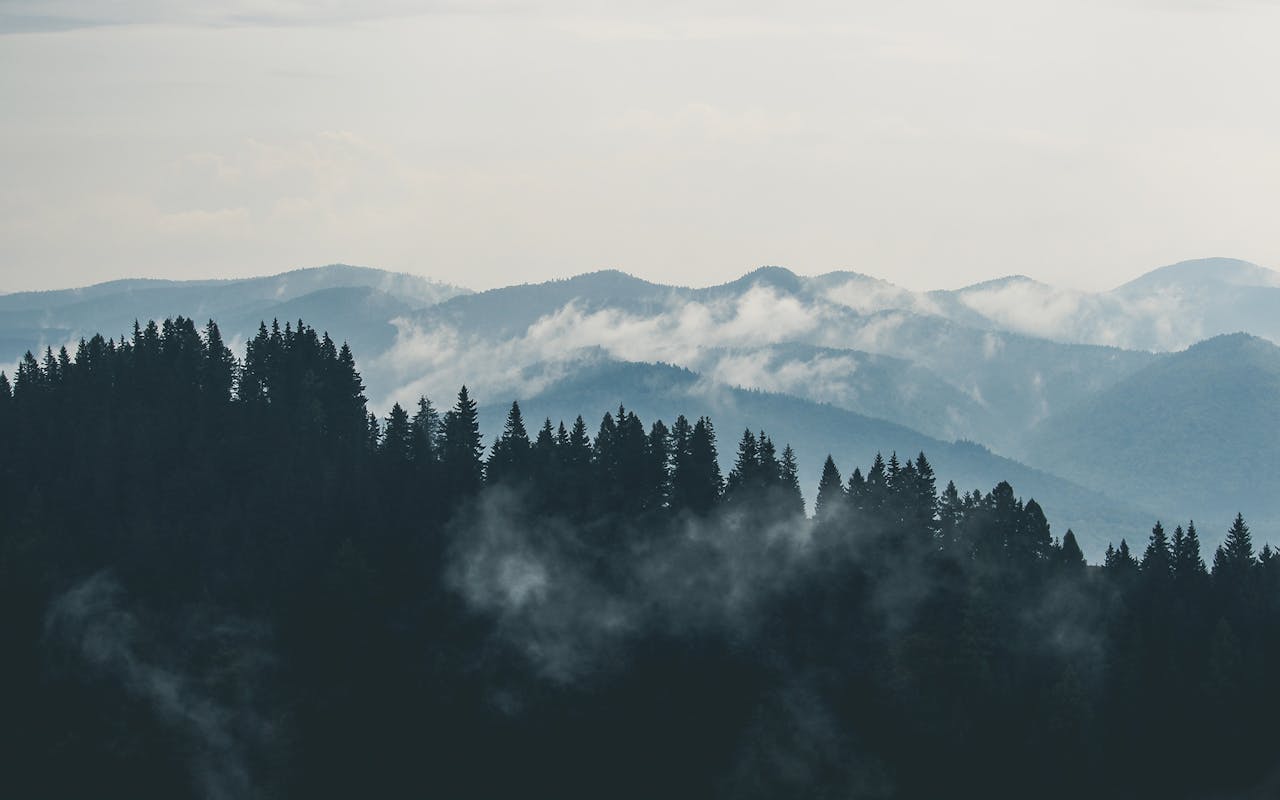
There is no denying the health benefits of spending time in nature. From a leisurely walk in an urban park to an immersive ramble in a desolate wilderness, exposure to natural habitats is consistently associated with a wide spectrum of psychological benefits, according to empirical research. Improved attentional function, lower physiological stress markers, better mood states, a lower incidence of mental disease, and even modest gains in prosocial behaviours like empathy and teamwork are some of these advantages.
There are a growing body of empirical work which has dozens of independent research teams—that demonstrates the multiple impact of natural environments on physical health and psychological well‑being. Lisa Nisbet, Ph.D., a psychologist at Trent University
who specialises in human nature connectedness, summarises the findings succinctly: “Engaging with nature, even in urban green spaces, produces measurable mood enhancements. Moreover, the subjective sense of affiliation with the natural world predicts higher levels of happiness independent of immediate physical exposure”.
Our minds can have a benefit from spending time in nature For example, they find that children’s cognitive development is enhanced by green areas close to schools, and self-control behaviours are enhanced by green vistas close to children’s homes. If we Compare it to adults addressing to public housing apartments with less access to natural surroundings, individuals assigned to units in neighbourhoods with greater green space had superior attentional functioning. Additionally, studies have shown that exposure to natural settings enhances working memory, cognitive flexibility, and attentional control, whereas exposure to urban settings is associated with attention deficits – https://www.sciencedirect.com/science/article/pii/S1438463917302699
The Benefits Of Being Outside

The effectiveness of short-term exposure to nature for cognitive rehabilitation is supported by experimental data. Participants in a groundbreaking Australian study had to push a key whenever certain numbers displayed on a screen as part of a tedious, attention-depleting assignment. Halfway through the experiment, one group was told to look at a lush green roof for forty seconds, while the control group spent the same amount of time staring at a plain concrete rooftop. When compared to the concrete condition, the “green-roof” condition produced a statistically significant decrease in error rates (Lee K.E. et al., Journal of Environmental Psychology, 42(1), 2015).
Research indicates that spending time outdoors can significantly benefit young people’s mental health in both immediate and long-lasting ways. A comprehensive Danish study utilised satellite imagery to examine nearly 900,000 individuals born between 1985 and 2003, measuring the amount of green space they were exposed to from birth until age ten. Decades of health data were then analysed alongside these early-life green space estimates.
The results were striking: children raised in greener environments showed a markedly lower risk of developing various mental health conditions later in life, including eating disorders, schizophrenia, depression, mood disorders, and substance abuse issues. In contrast, those exposed to the least green space during childhood experienced a 55% higher risk of such problems.
Even just viewing images of nature can be beneficial, according to research. Frantz et al. asked participants to walk through a park or down a city street in a classic experiment. A different group watched videos of the same two settings while remaining inside.
Any exposure to natural landscape, whether it was seen in person or on a computer, improved participants’ attentional performance, elevated their mood, and gave them perspective on a personal issue they were attempting to resolve in all circumstances. The benefits of real-world immersion, however, were notably greater for those who went outside Mayer, F.S., Frantz, C.M., Norton, C. & Rock, M., 2005. The role of connectedness to nature in the relationship between nature exposure and well‑being. Journal of Environmental Psychology, 25, pp.425‑436.
Additionally, nature might encourage us to act in a more cooperative and environmentally friendly manner. Researchers have demonstrated through a series of trials that people are more inclined to act in ways that benefit others and the ecosystem when they are briefly exposed to natural scenes, whether through film, a field trip, or direct immersion.
For instance, compared to those who watched videos of built-environment landmarks, participants who watched brief nature documentaries prior to playing a resource-allocation game were more likely to adopt sustainable harvesting strategies and work together with other players (see Capaldi, Passmore, Nisbet et al., 2015). In comparison to a similar visit to an aerospace museum, a single outing to a nature-focused school improved prosocial actions towards both classmates and unfamiliar peers, according to a parallel study with primary school students (see Milfont & Schultz, 2016).

No responses yet